Cart
0
You may also like


If you've ever spent a night around a campfire dodging smoke every time the wind shifts, you already know the problem. Smoke gets into your eyes, your jacket and your sleeping bag. Smokeless fire pits promise a fix. But how do they actually work, and are they really smokeless?
Here's the short version: smoke is fuel that didn't finish burning. A smokeless fire pit is built to burn it a second time before it escapes.
When wood heats up, it releases a mix of gases, tiny droplets of tar and fine particles. If there's enough heat and oxygen, those gases ignite and turn into flame. If there isn't, they drift away as smoke.
An open fire ring has two problems:
Wet or green wood makes both problems worse. Much of the fire's energy goes into boiling off water, so the fire runs cooler and smokier.
A dual-combustion fire pit gets air into the fire in two places:
When the smoke rising off the wood meets that stream of hot, oxygen-rich air, it gets a second chance to ignite. You'll often see this as small jets of flame near the top rim. That's the smoke burning off.

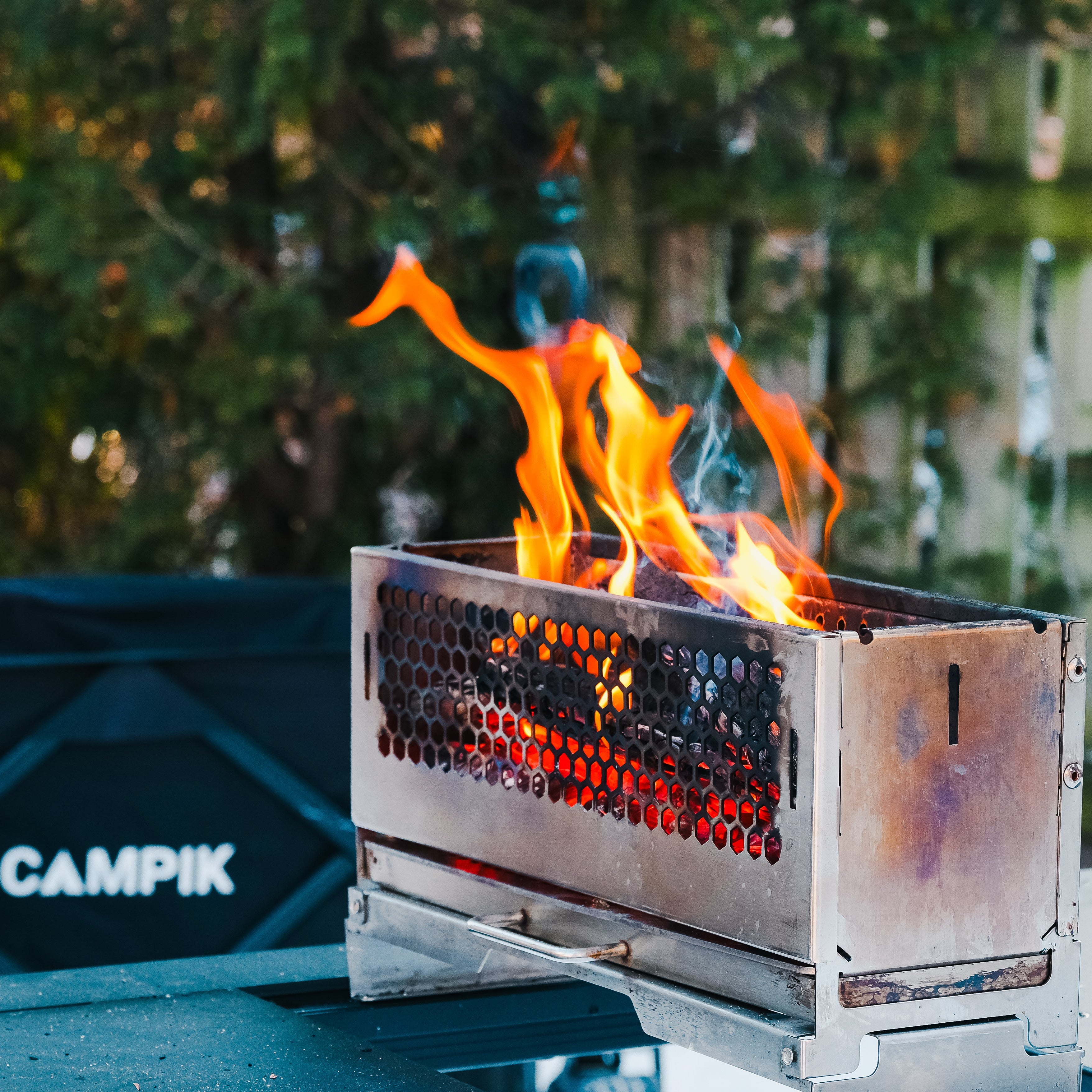
The Campik fire pit uses a dual combustion panel with an air intake for this. Its mesh side walls also let air circulate around the fire, so it burns more evenly instead of smouldering in the middle.
No, and any brand that says otherwise is overselling. Every wood fire smokes a little when you first light it, when you add a fresh log and as it dies down. A well-designed smokeless pit cuts the smoke sharply once it's up to temperature. It won't erase it completely.
The biggest factors are the ones you control.
Big backyard smokeless pits are heavy. For camping you want something that packs flat. The Campik pit is made from 304 stainless steel and folds down to 360 × 125 × 50 mm (about 14 × 5 × 2 in). It comes with a carry bag. Set up, it's 200 mm tall, and the side walls open out to 280 mm wide when you want a bigger fire.
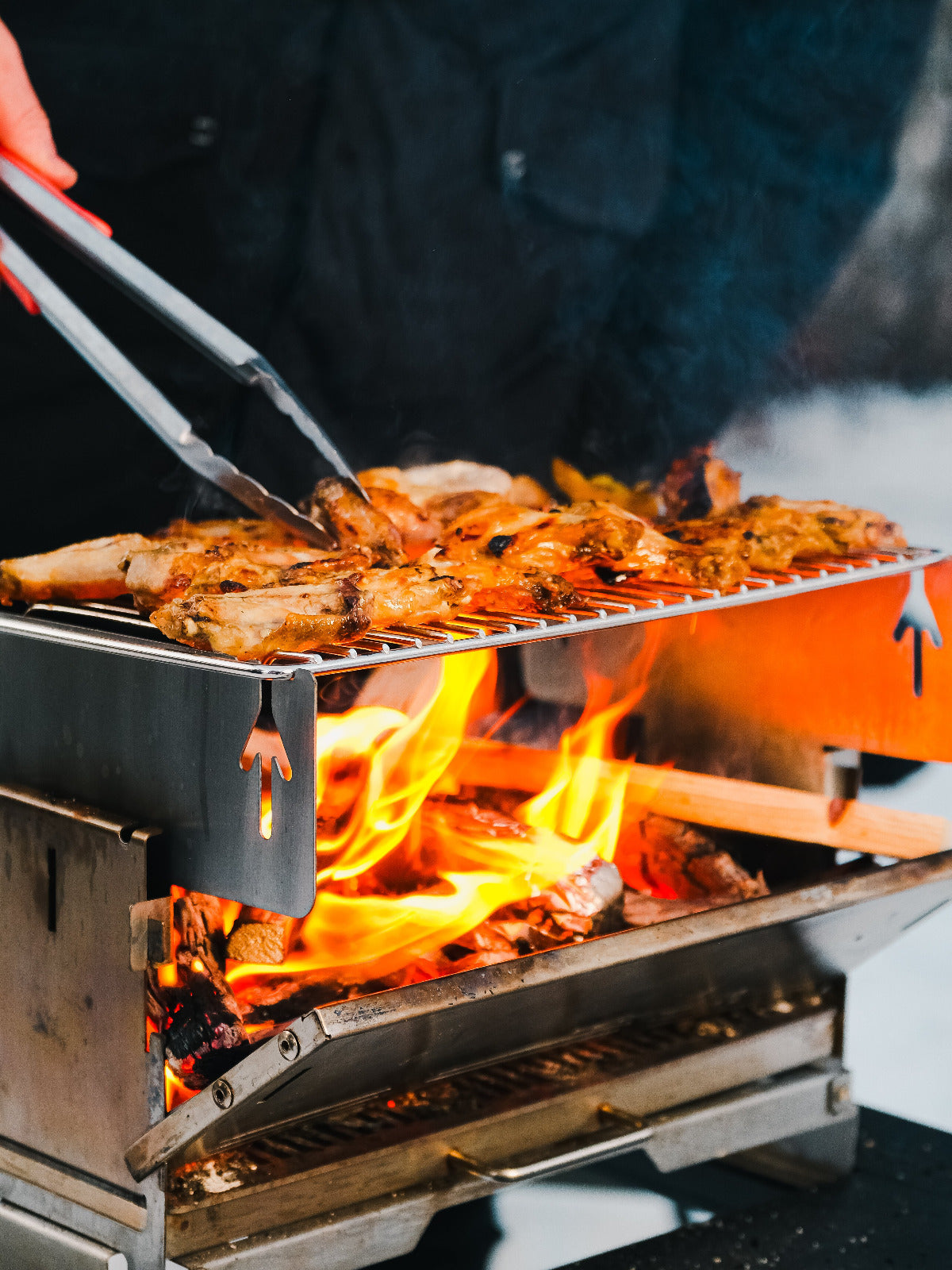
It burns wood from small branches to medium logs, and it also takes charcoal. That's handy if you'd rather cook over coals.

A smokeless fire pit is still an open wood fire. Use it outdoors only, on a stable non-flammable surface, away from tents and overhanging branches. Always check local fire restrictions before you light up: provincial, state and park rules change through the season, and a fire ban usually covers portable wood-burning pits too.
Want less smoke at your next campsite?
The Campik Smokeless Fire Pit comes with a free grill. Ships to Canada and the US.